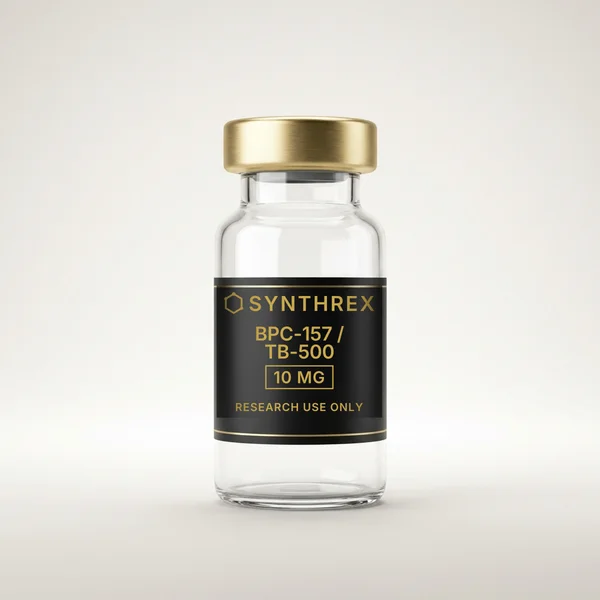
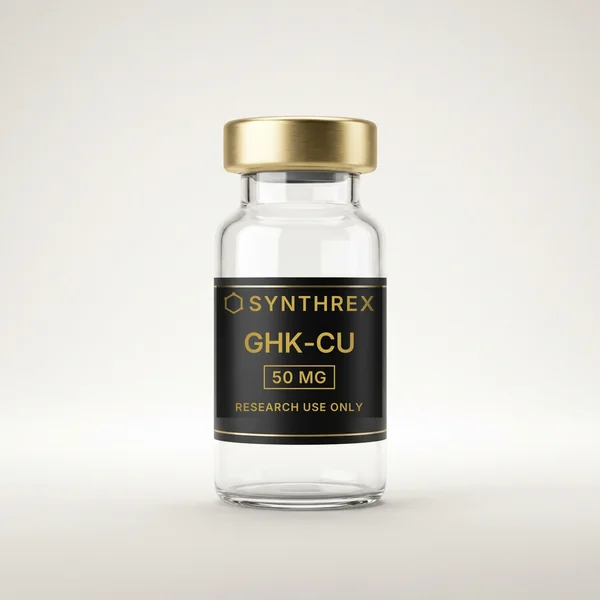
BPC-157 + TB-500 Blend + GHK-Cu Set
BPC-157 + TB-500 Blend 10mg + GHK-Cu 50mg. A combined repair and dermal-matrix research set.
$128.00View
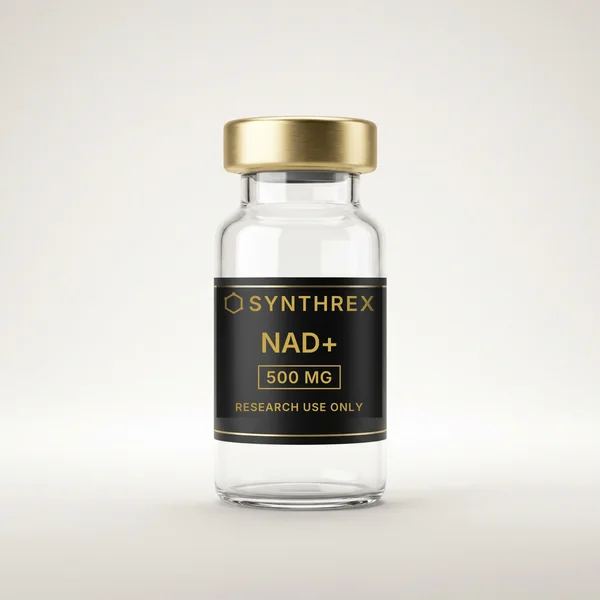
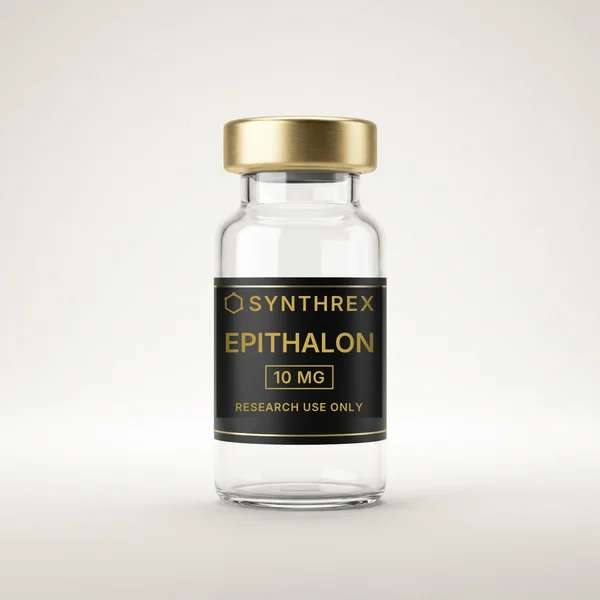
Bundle
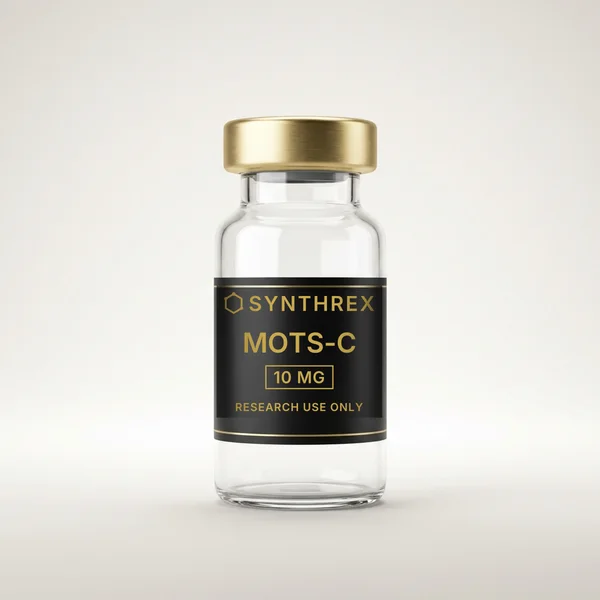
NAD+ 500mg + Epithalon 10mg + MOTS-c 10mg. A three-compound cellular-energetics and senescence research set.
Select size
Quantity
Total
$171.00
That's the price. No inflated list, no permanent “discount” code to make it look cheaper than it is.
COA pending. The certificate for this lot will be uploaded to our COA library as soon as we have it.
Have a question?
For research use only. Not for human consumption.
Products supplied by Synthrex Biotech LLC are intended strictly for in-vitro laboratory research and development by qualified professionals. They are not drugs, foods, cosmetics, or dietary supplements, and are not approved by the FDA for human or veterinary use. They are not sold for, and must not be used for, human or animal consumption or administration of any kind. Synthrex Biotech LLC is not a compounding pharmacy or chemical compounding facility as defined under section 503A of the Federal Food, Drug, and Cosmetic Act, and is not an outsourcing facility as defined under section 503B of that Act. By purchasing, you affirm that you are a qualified researcher acquiring these materials for lawful research purposes only. A Safety Data Sheet (SDS/MSDS) is available on request for every compound.
Sold by Synthrex Biotech LLC. A Safety Data Sheet (SDS) is available on request at support@synthrexbiotech.com.
Every vial carries its own batch number, exactly as it would if bought separately. Every certificate is published and available for review. No published literature characterises this combination as a single entity.
A coenzyme studied in cellular-energetics, redox-balance and sirtuin-pathway research.
Certificate of Analysis: JNK-58292
Full research notes and sources for NAD+ →A synthetic tetrapeptide studied in telomere-biology and cellular-senescence research.
Certificate of Analysis: SYX-EPI50-0726
Full research notes and sources for Epithalon →A mitochondrial-derived peptide studied in metabolic-signalling and cellular-energetics research.
Certificate of Analysis: JNK-65538
Full research notes and sources for MOTS-c →NAD+ is not a peptide at all — it is nicotinamide adenine dinucleotide, a coenzyme present in every living cell, and one of the oldest molecules in biochemistry. It was first identified by Arthur Harden and William Young in 1906 as a heat-stable fraction required for yeast fermentation. Its structure was determined by Hans von Euler-Chelpin, and Otto Warburg later established its role in hydride transfer. The modern interest in NAD+ dates to the discovery that sirtuins — a family of protein deacetylases — consume NAD+ as a substrate, which linked cellular NAD+ availability to a regulatory system rather than just to metabolism.
NAD+ functions as an electron carrier in redox reactions and as a consumed substrate for three enzyme families: sirtuins, PARPs, and CD38/cADPR synthases. Because those enzymes cleave rather than recycle it, their activity depletes the cellular pool — the mechanistic basis for the research interest in NAD+ availability. The two review articles cited below, in Trends in Cell Biology and Science, are the standard entry points to that literature. Supplied as a laboratory research material.
Epithalon (also written epitalon) is a synthetic tetrapeptide, Ala-Glu-Asp-Gly, developed by Vladimir Khavinson at the St Petersburg Institute of Bioregulation and Gerontology. It is the synthetic counterpart of epithalamin, a polypeptide extract of the pineal gland that Khavinson’s group worked on from the 1970s. It belongs to the broader Russian “peptide bioregulator” programme — short peptides proposed to act at the level of gene expression, a research tradition largely conducted within Russian institutions and, for most of its history, published in Russian-language journals.
The published mechanism claim is that short peptides of this type interact with DNA and influence gene expression, with the specific proposal that epithalon affects telomerase expression in cell culture. A 2025 review in the International Journal of Molecular Sciences provides the most accessible English-language overview of the compound and its reported properties. Read that literature knowing its provenance: much of the primary work originates from a single research group, and independent replication outside that programme is limited. Not FDA-approved for any use.
MOTS-c belongs to a genuinely novel category: mitochondrial-derived peptides, encoded not in nuclear DNA but in the mitochondrial genome itself. It is a 16-amino-acid peptide encoded within the mitochondrial 12S rRNA gene, identified by Pinchas Cohen’s group at USC and reported in Cell Metabolism in 2015. The discovery mattered beyond the molecule: it established that the mitochondrial genome encodes signalling peptides that act on the rest of the cell, which was not the prior understanding of what mitochondrial DNA does.
Characterised as a regulator of cellular energy homeostasis, with published work in mice and cell culture describing effects on the AMPK pathway and folate–methionine cycle intermediates. The founding 2015 Cell Metabolism paper reported its characterisation in murine models. A 2023 review in Frontiers in Endocrinology surveys the subsequent literature. All preclinical — rodent and cell-culture. Not FDA-approved for any use.
These statements have not been evaluated by the Food and Drug Administration. This product is not intended to diagnose, treat, cure, or prevent any disease. Summaries of published literature for research reference only. Not a claim about any product’s effect.
Batch releases & restocks
Every certificate is published and available for review. Join the Lab List and we'll tell you when a new one lands and when a sold-out compound is back — plus 15% off your first order, shown on screen the second you join.
Batch and restock notices from Synthrex Biotech LLC. No dosing advice, ever. One-click unsubscribe on every email.
BPC-157 + TB-500 Blend 10mg + GHK-Cu 50mg. A combined repair and dermal-matrix research set.
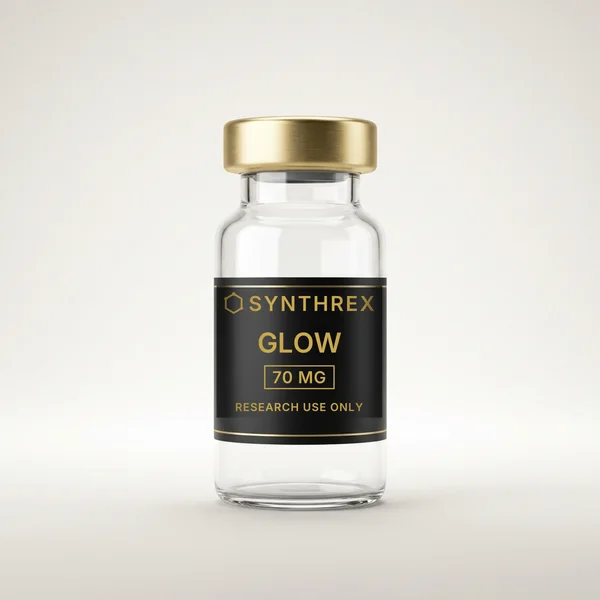
GLOW Blend 70mg + GHK-Cu 50mg. Copper-peptide focused preparation set for dermal research models.
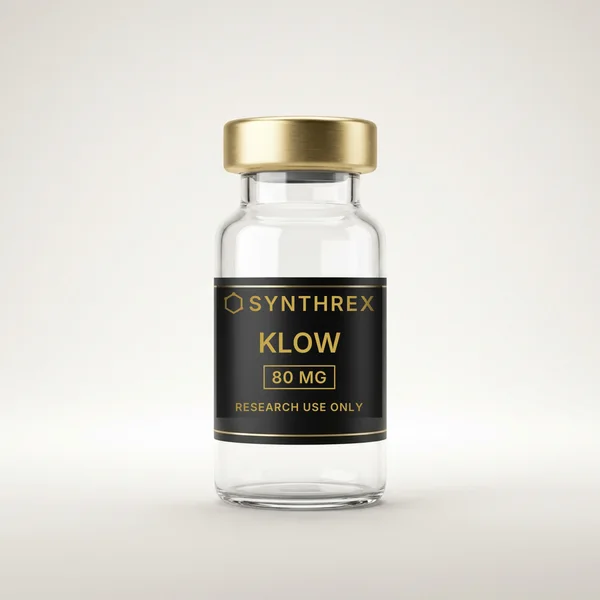
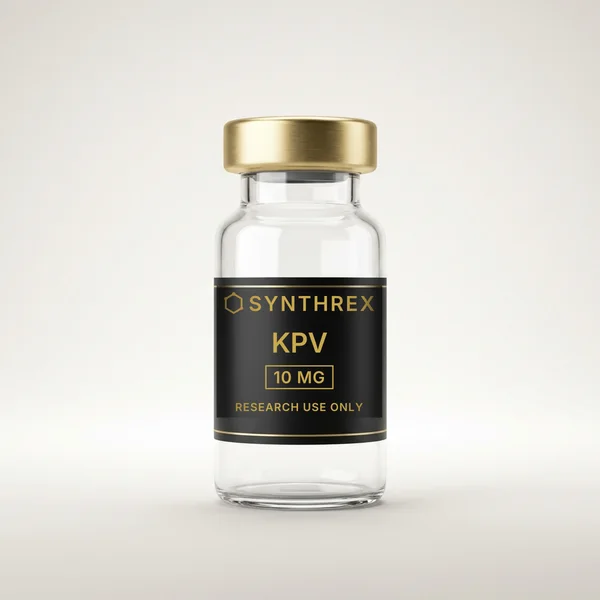
KLOW Blend 80mg + KPV 10mg. A four-compound blend paired with an alpha-MSH fragment for multi-pathway research.
These statements have not been evaluated by the Food and Drug Administration. This product is not intended to diagnose, treat, cure, or prevent any disease.